
What a planned 2.4% NHS pay rise means for your take-home pay and pension
Tax and NI thresholds stay frozen until 2031. What a planned 2.4% NHS pay rise leaves in your take-home pay, and what it adds to your 2015 scheme pension.
Tax and NI thresholds stay frozen until 2031. At the top of Bands 2 to 6, about £65 of each £100 of a 2.4% pay rise reaches you. The pension you've built up in the 2015 scheme is expected to grow by 5.0% in April.
The Budget on 28 October left income tax and National Insurance thresholds unchanged for 2027/28, so tax will take a larger share of next year's NHS pay rise.
The government is planning for a 2.4% rise in 2027/28 for Agenda for Change staff; no award has been made. With the thresholds fixed, income tax, NI and your pension contribution will each take a share of the rise, with the remainder being your take-home pay. Bear in mind that this covers England, Wales and Northern Ireland; Scotland sets its own income tax bands in its Budget on 3 December.
- What the Budget changed: it left income tax and NI as they are. The rates for 2027/28 are the same as this year's. The income tax and NI thresholds stay frozen until April 2031, as set at last year's Budget.
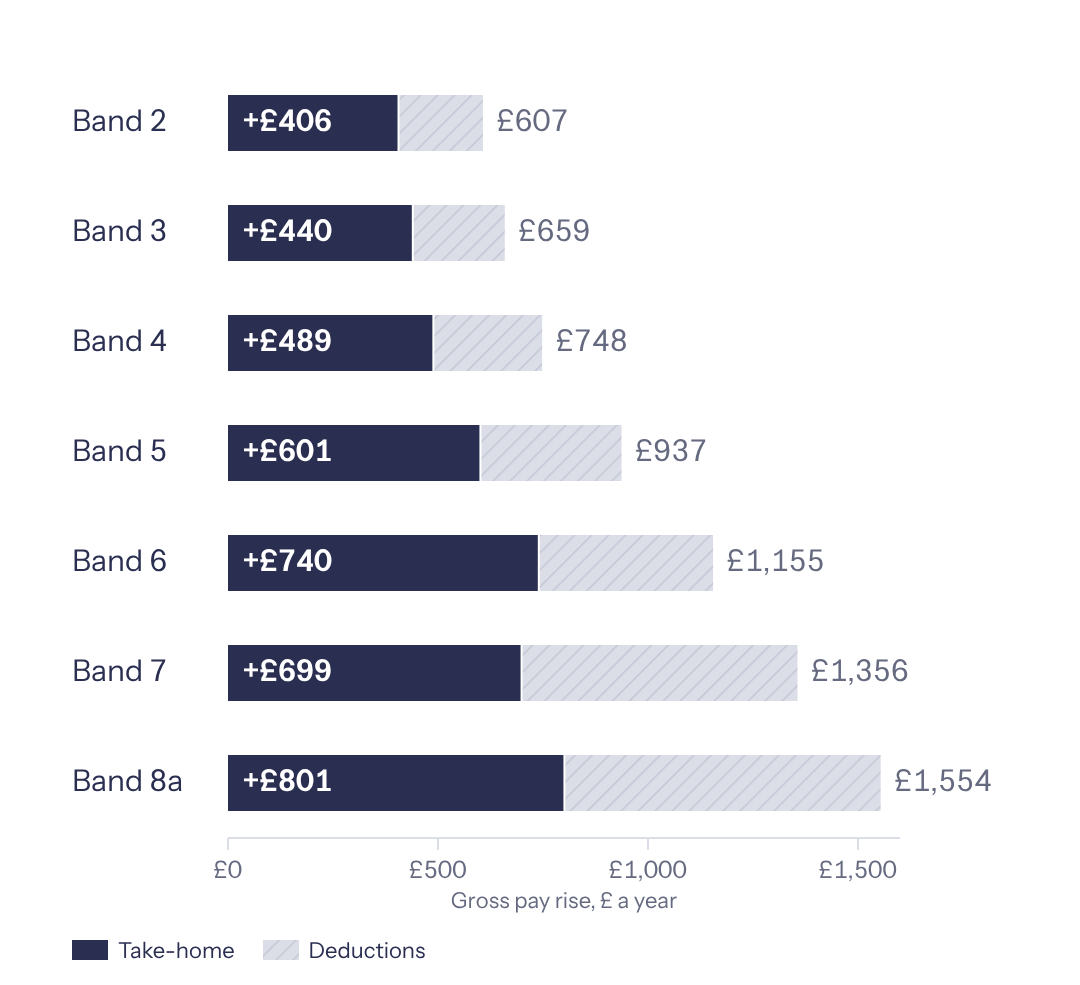
- What reaches you: the rise is taxed at 40% at the top of Bands 7 and 8a, so £52 of every £100 reaches you there. At the top of Bands 2 to 6, about £65 does.
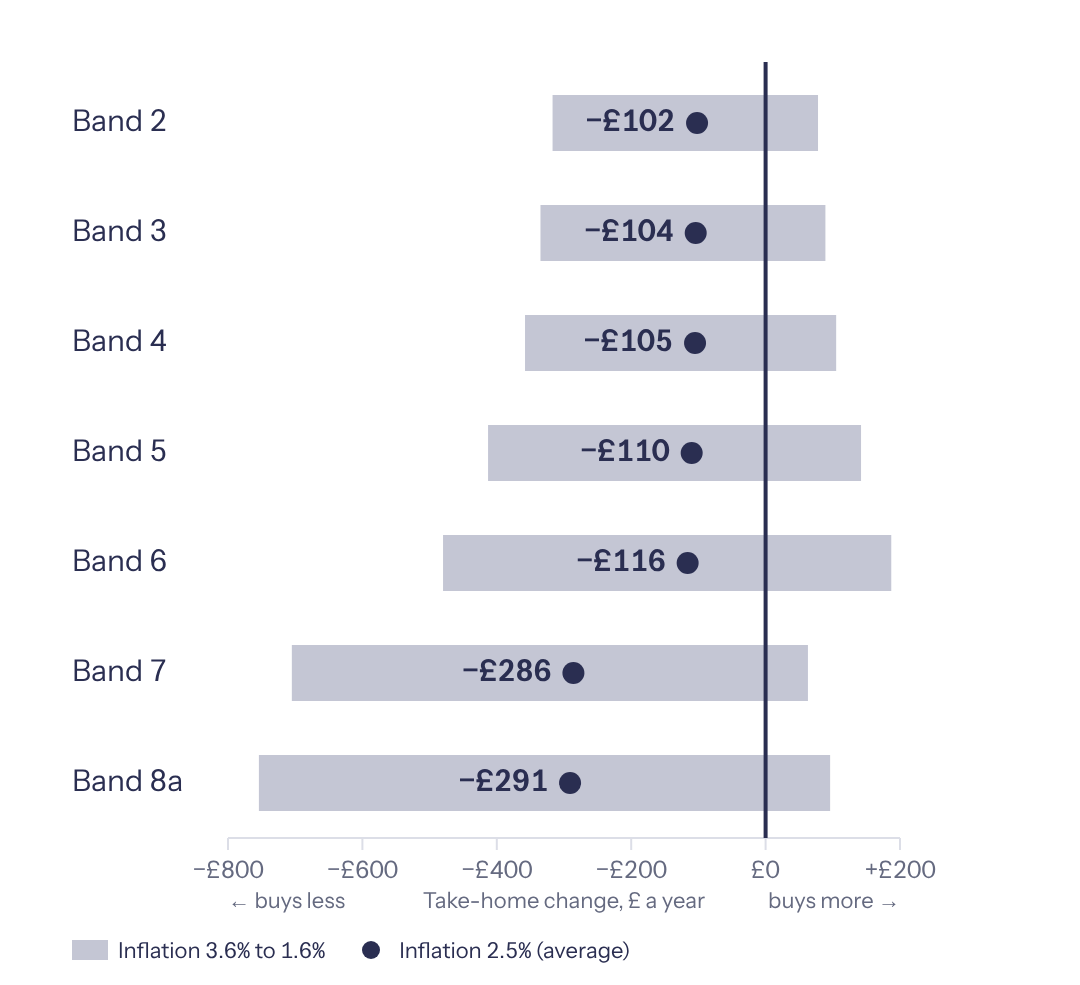
- Against inflation: take-home pay rises by about 2% at the top of a band. Prices rose 3.5% in the year to September, and inflation by late 2027 is a forecast: between 1.6% and 3.6%, 2.5% on average.
- Your pension: what you've built up in the 2015 scheme is expected to be revalued by 5.0% in April 2027: September's inflation of 3.5%, plus 1.5%. A year's addition at the top of Band 5 rises from £723 to £740. The contribution thresholds would rise by 3.5%, so the rise on its own shouldn't move anyone at the top of a band up a tier.
Where a 2.4% rise goes
The government says most Agenda for Change staff are at the top of their band, in its submission to the NHS Pay Review Body and so we've worked out figures accordingly here.
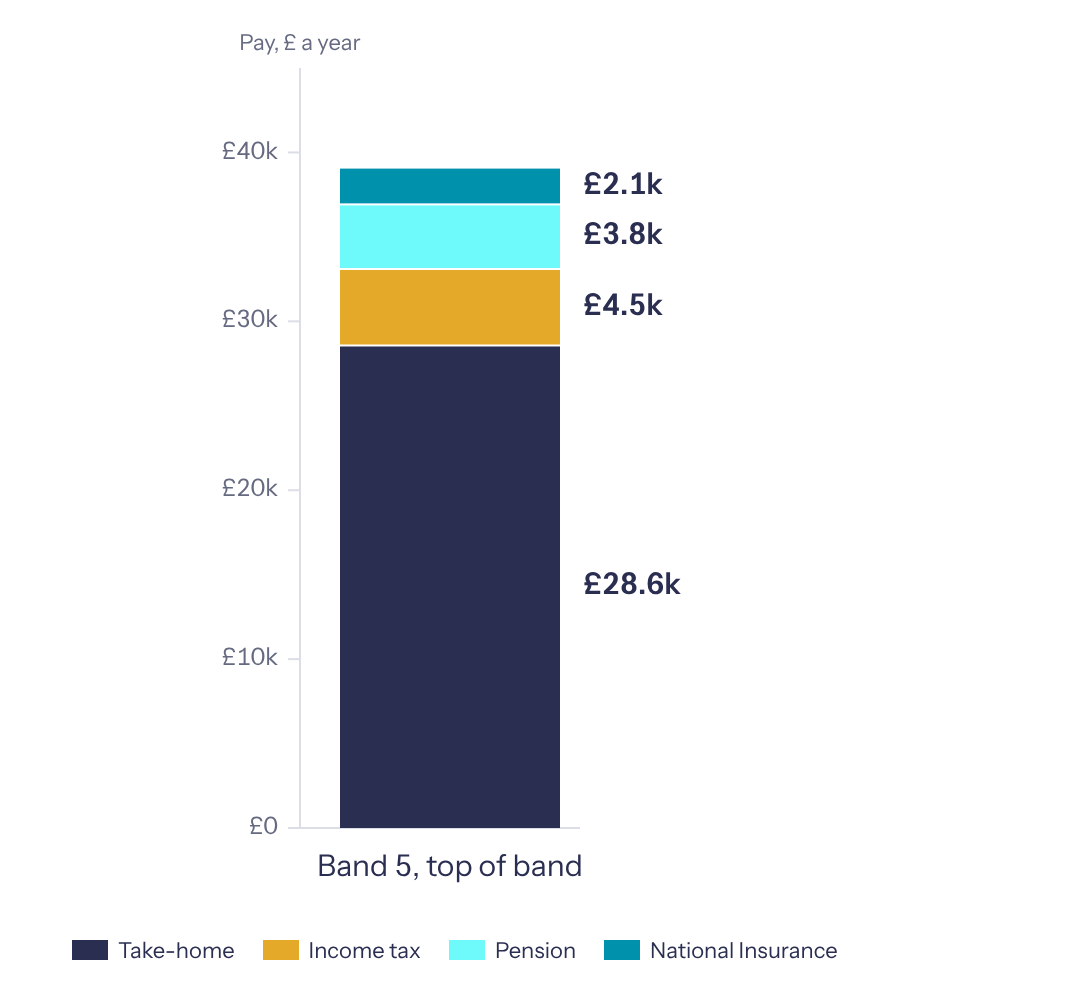
Worked example: the top of Band 5
- The rise: £937 a year before deductions.
- Deductions: income tax takes £169, National Insurance £75 and your pension contribution £92.
- What's left: £601 a year, a 2.1% rise in take-home pay.
Held fixed: full-time, England, no student loan, the same pension tier in both years.
What actually lands in your pocket
Income tax, NI and pension cost around £35 of every £100 of the rise at the top of Bands 2 to 6, and £48 at the top of Bands 7 and 8a.
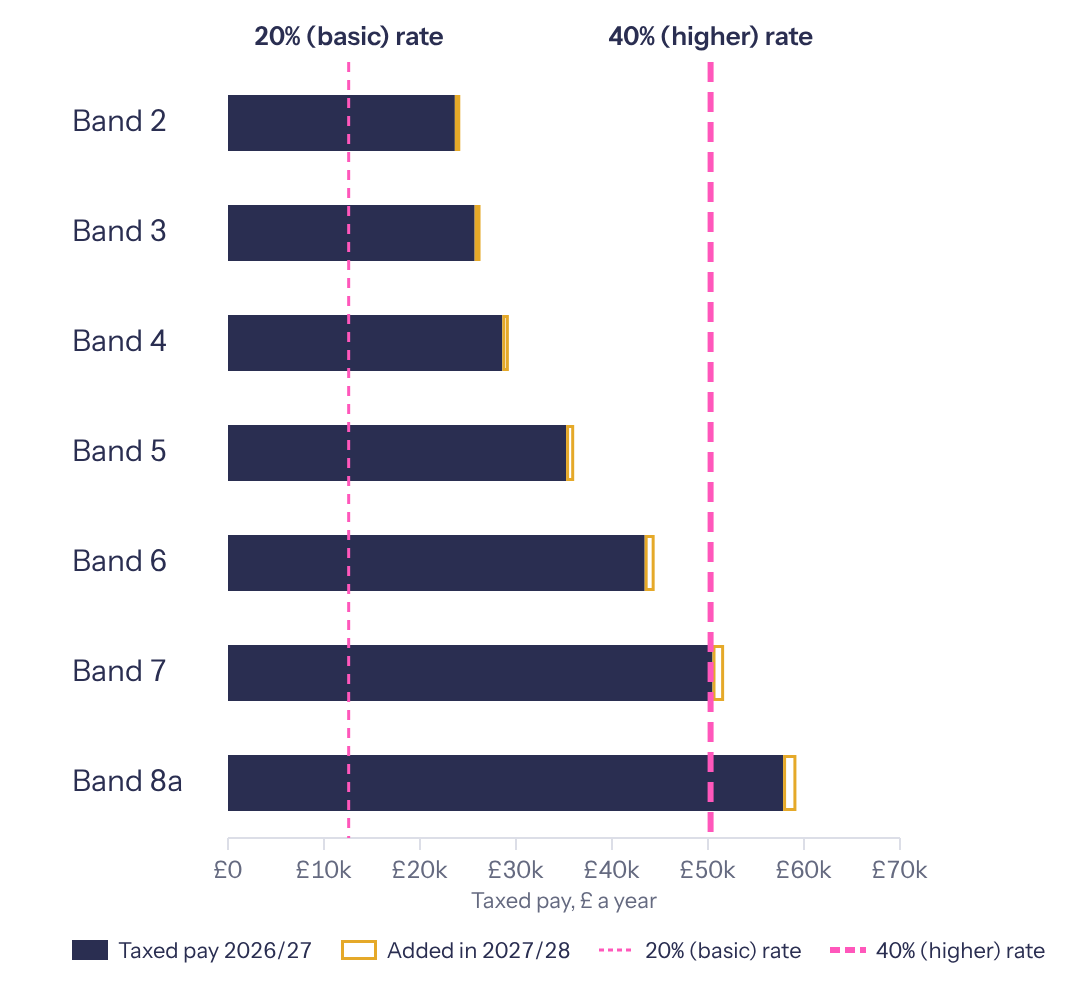
Because tax thresholds are fixed in the Budget (fiscal drag), more of your income is pushed into tax from the pay rise. Your pension contribution comes off before income tax is worked out. At the top of Band 7, pay after the pension is already over £50,270, where the higher rate of income tax starts. So the whole rise is therefore taxed at 40%, not 20%.
How the take-home rise compares with inflation
Take-home pay at the top of each band rises by between 1.8% and 2.2%. Prices rose by 3.5% in the year to September, and inflation over 2027/28 is a forecast. The Treasury's comparison of forecasts shows independent forecasters expecting between 1.6% and 3.6% by the end of 2027, 2.5% on average. Those forecasts are for late 2027, not an average over the 2027/28 pay year.
Your pension: what the rise adds
In the 2015 scheme, each year you work adds 1/54 of that year's pensionable pay to your pension. The NHS Business Services Authority's member guide sets this out. At the top of Band 5, pay of £39,043 adds £723 of pension for the year. With the planned rise, pay of £39,980 adds £740.
What you've built up is then revalued each April while you work. It grows by the previous September's inflation, which a Treasury order under the Public Service Pensions Act 2013 sets each year, plus 1.5% under the NHS scheme's rules. September's inflation was 3.5%, so the revaluation in April 2027 is expected to be 5.0%, against the planned 2.4% pay rise. The 2027 order hasn't been made yet; the 2026 order set last year's.
Because what you've built up is revalued on September's inflation, a pay rise below it doesn't change that part. It lowers the pay each later year is based on, so every slice earned after it is smaller.
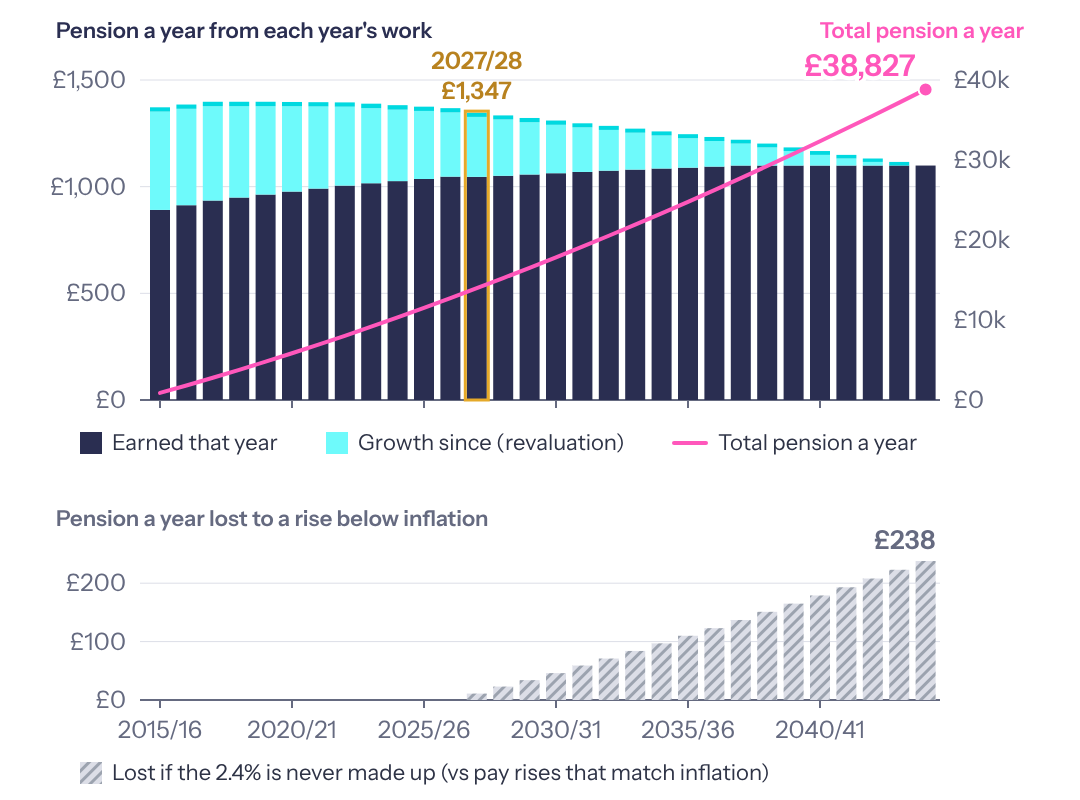
The chart below illustrates how that works for Claire, a fictional ward manager at the top of Band 7. It isn't a forecast. In the worst case, where her 2027/28 pay rises 2.4% rather than with inflation (3.5%) and never catches up, her pension at 68 is £238 a year lower. A later pay round that makes up the difference would close that gap.
NHS pension contribution rates depend on your pay, in tiers. The thresholds between them rise each April by the higher of two figures: the previous September's inflation and the pay award. The Department of Health and Social Care sets this out in its report on the thresholds. By that rule the thresholds would rise by 3.5% in April 2027. That's faster than a 2.4% pay rise, so the rise on its own shouldn't move anyone at the top of a band up a tier. The NHS Business Services Authority hasn't published the 2027/28 thresholds yet.
What isn't decided yet
- The award: 2.4% is what the government is planning for. The pay review body reports in 2027, and the government then decides.
- Scotland: its income tax bands for 2027/28 come in its Budget on 3 December, so these figures don't apply there yet.
- The pension thresholds: expected, not published; the NHS Business Services Authority sets them before April.
- The revaluation: 5.0% is expected from September's inflation; the 2027 Revaluation Order sets it.
See your own figures
These figures are for the top of each band. Our take-home pay calculator works it out for your own pay, hours and pension. You can compare this year's pay with pay plus 2.4% side by side.
Sources
- HM Treasury, Budget 2026: rates and allowances, 28 October 2026
- DHSC and NHS England evidence to the NHS Pay Review Body, 2027 to 2028
- ONS, Consumer price inflation, UK: September 2026
- HM Treasury, Forecasts for the UK economy, October 2026
- DHSC, uplifts to the NHS Pension Scheme member contribution thresholds